AI connected to operations
Organize information, tasks and next actions in a usable application.
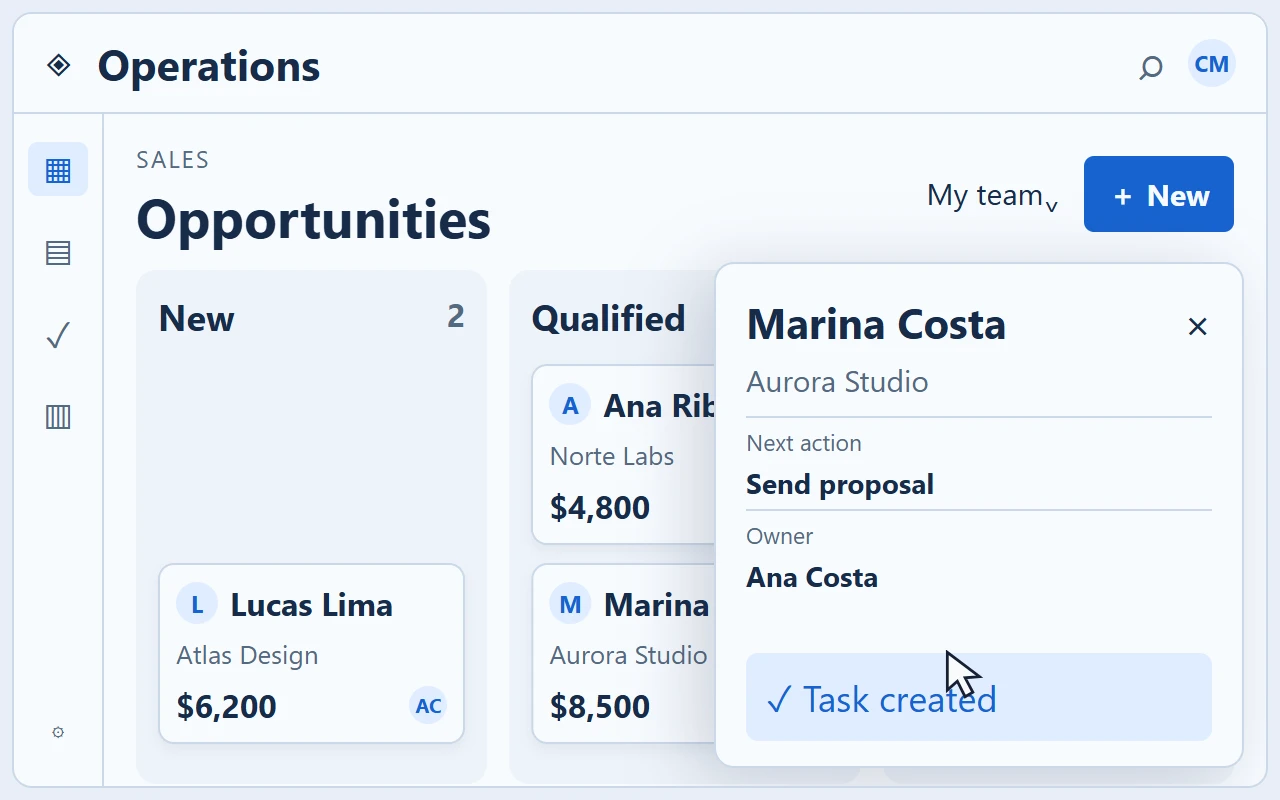
The operations platform demonstrates dashboards, pipeline, proposals and assistance with bounded tools.
Recent publications from my channel.

My work connects product experience to the architecture behind AI.
The case studies cover an operations platform with AI assistance and an agent runtime with human approval and resumption.
Three approaches to applied AI illustrated by the projects below.
Organize information, tasks and next actions in a usable application.
The operations platform demonstrates dashboards, pipeline, proposals and assistance with bounded tools.
Structure intention, proposal, review and execution.
Approval belongs to an exact proposal: changes, revoked sources and incompatible context stop execution.
Define external reads, response validation and failure handling.
The reviewed connectors implement capability negotiation, timeouts, bounded retries and pagination checks.
LLMs, agents, integrations and data, with contracts, tests and security controls. Open a card to examine architecture and evidence.
Illustrative project animations. The demonstration uses synthetic data. Briefings explain implementation scope and local validation.
CASE STUDY / 01
Demo online · AI controls validated locally
Operational decisions depend on connecting contacts, tasks, proposals and pipeline stages.
AI assistance must access these records within user permissions and allowed operations.
An operations application with dashboards, pipeline, tasks, proposals and indicators, alongside an LLM assistance backend.
The independent demo exposes product organization without customer data or services.
Product and interface
Dashboards, pipeline, tasks and proposals
API and context
Identity, permissions and validated input
Model and tools
Interpretation, tool calling and limits
The interface calls the API.
Semantic tools instead of model-generated unrestricted SQL.
Access remains a server responsibility and can be exercised with controlled provider responses.
Solution structure, module and product organization, assistance and data-access decisions, implementation coordination, validation scenarios and the independent demonstration.
A navigable synthetic product and locally verified chat, context, tool and authorization controls.
Usage contracts distinguish unknown cost from zero and handle recoverable provider failures.
Lexical memory queries and migrations are implemented; real PostgreSQL validation is pending.
CASE STUDY / 02
Components validated locally · integration in development
An agent may use an unsuitable source, execute a changed proposal or resume a task twice.
These boundaries require architectural controls beyond model instructions.
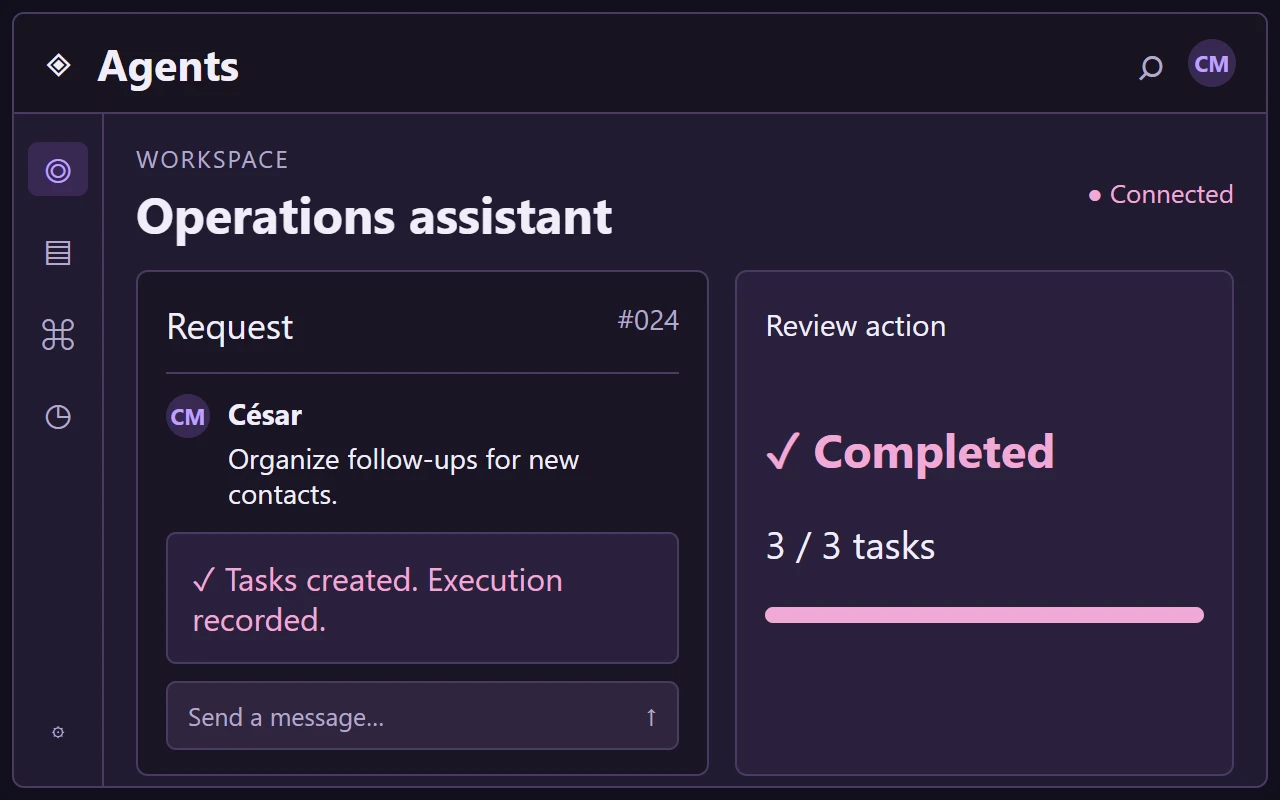
An agent runtime separating request, proposal, authorization, review and execution.
MCP resource and REST connectors operate within explicit conditions for continuing or stopping.
Proposal and source
Authorized context and required capability
Approval and state
Exact-version review and transition rules
Execution and resumption
Ownership and completion records
The server binds a source to the organization and required capability.
Deny ambiguous sources and invalidate approval after proposal changes.
Completion is recorded before success is announced; ownership and resumption logic are tested with in-memory stores.
Execution boundaries, states, approval rules, component and connector implementation coordination and failure validation.
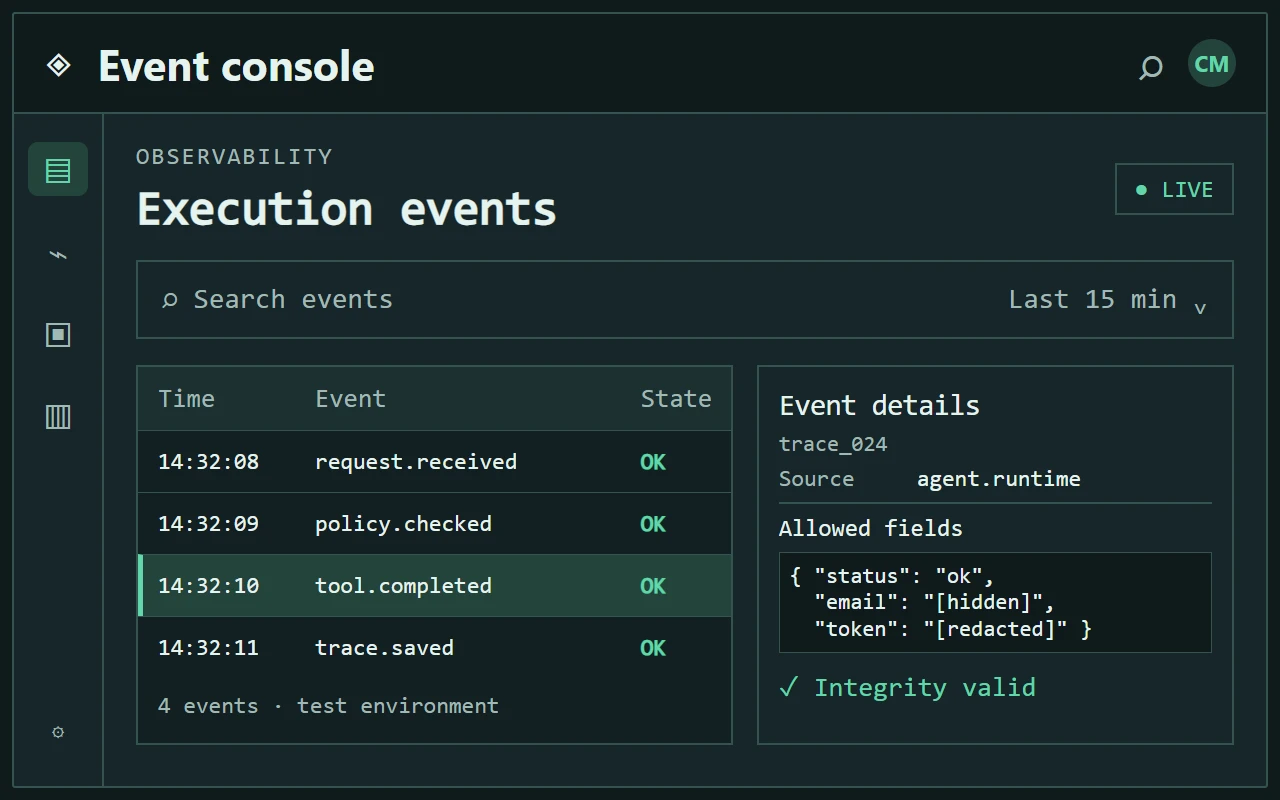
Separate observability work covers evidence integrity and telemetry minimization.
Local scenarios verify revoked sources, incompatible approval, altered proposals, concurrent resumption, protocol negotiation and read failures.
They do not establish database locks or operational recovery.
Tests use simulated providers, transports and stores.
Capabilities explained through system behavior. Each area connects a concrete decision to a project and its evidence scope.
Separate interface, API, context, model and tools.
A semantic tool request is validated and authorized before sanitized information returns to model context.
Orchestrate proposals and actions through explicit states.
Human review applies to a particular organization, proposal version and fingerprint.
Resumption checks execution ownership and records completion before announcing success.
Local scenarios use simulated models and stores.
Contracts for external information access.
The MCP client negotiates capabilities and lists resources; REST/Microsoft Graph reads constrain origin and document scope.
Timeouts, bounded retries, circuit breakers and pagination checks are exercised with injected transports.
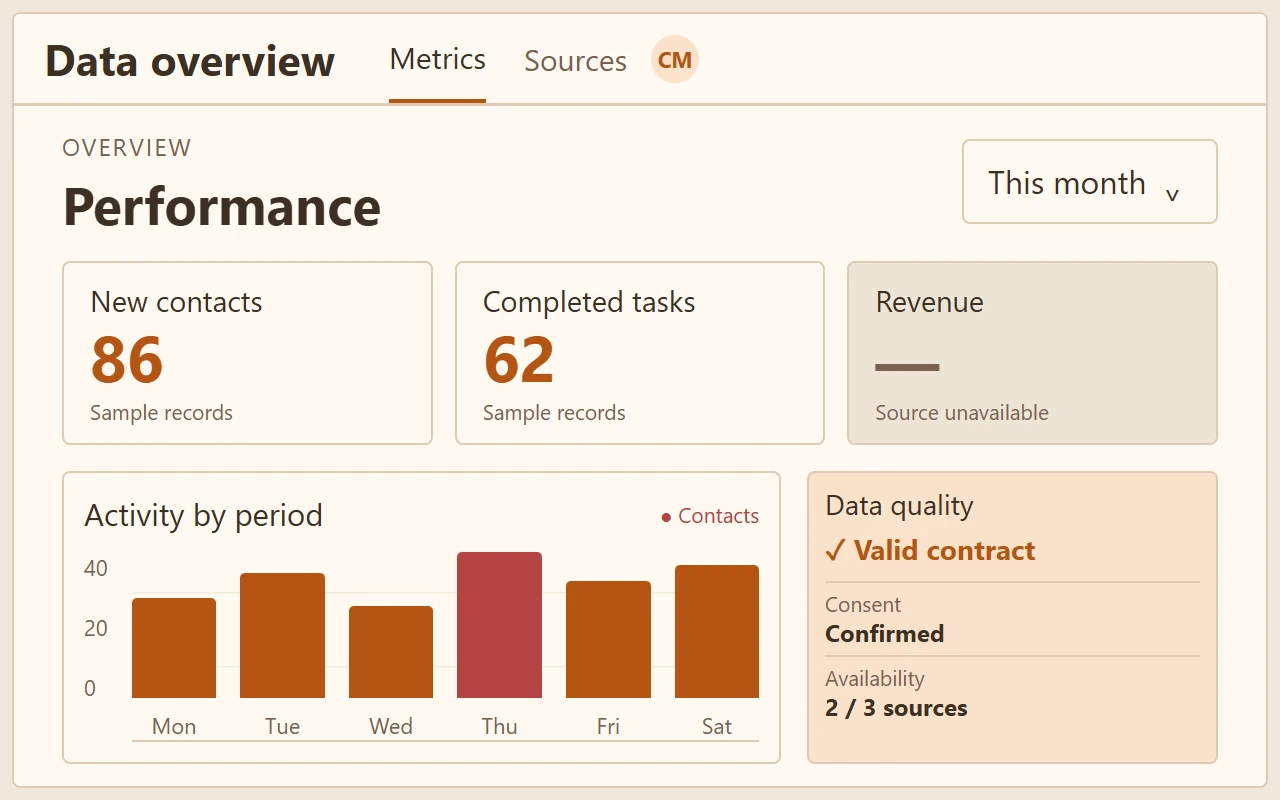
Authorized context, metric contracts and lexical memory retrieval.
Missing information must remain distinguishable from valid values.
PostgreSQL queries and migrations are implemented.
Real database validation is pending; this is lexical retrieval, not a vector-search claim.
Server-derived permissions, source-to-organization binding and sanitization.
Negative scenarios test when assisted actions must be refused.
Missing, revoked or ambiguous sources deny access.
Evidence covers local controls, not a comprehensive security audit.
Usage and cost distinguish complete, partial and unavailable values.
Separate integrity components check references and hashes; OTLP sanitization allows selected fields.
Telemetry components have local validation and remain in development.
Integrated activation and full tracing are not proven.
Separate presentation, API and persistence dependencies.
Demo availability is public.
Runtime manifests prove infrastructure definition, not integrated operation.
Turn expected behavior into conditions for accepting input, advancing execution and handling failure.
Contracts and negative tests make decisions examinable.
Recorded scenarios include invalid input, altered proposals, revoked sources and unavailable integrations.
Briefings separate implementation from validation.
Tools appear alongside their role. Integration and telemetry protocols retain their specific scope and implementation stage.
OpenRouter connects the service to a language model.
MCP negotiates and lists resources; protocol capabilities are checked before an operation.
Fastify organizes assistance routes with Zod input validation.
PostgreSQL provides lexical memory queries and migrations.
Docker Compose defines a nonproduction runtime environment.
Experience organized by project scope. Responsibilities, outcomes and stage are linked in the case studies above.
Work connecting product experience to AI assistance: module organization, access contracts and an independent demonstration.
The interface exposes user workflows; API scenarios examine controls separately.
Work at the boundary between assisted decisions and effects: approval conditions, authorized sources, execution ownership and connector behavior.
The case explains states, refusal rules and resumption scenarios.
Connect the product need to examinable rules.
The agent runtime defines when proposals advance and when changes require new approval.
Separate interpretation, authorization and effects.
Assistance tools use validated inputs and bounded operations rather than unrestricted model-selected queries.
Exercise invalid input, revoked sources, authorization errors and concurrent resumption.
Reports identify simulated dependencies and scenario scope.
Record architecture, decisions and stage.
A demo, local test and manifest prove different aspects; real databases and integrations need their own validation.